
Activity › Forums › Astrosoftware › Astro Pixel Processor › Oops… a sphere after integrating lights › Reply To: Oops… a sphere after integrating lights
 Haverkamp
After extensive testing on your data, I have some conclusions now.
First of all, the best workflow would be to make a camera profile using single subs of each panel. To do this we can register with:
3) star analyis
star count limit around 5000
kappa above noise at 3
4) register
“same camera and optics” on
“calibrated projective” registration model
“mosaic” mode
and save distortion model.
During registration, you’ll be asked for focal length and pixel size, I used 500mm and 5 micron. You don’t need to be exact here. These are just used as starting points in the calculation. Then when finished, you can save this camera profile with a camera and objective/ota name.
The next step is to create all 6 panels and use this camera profile for registration.
“choose saved camera profile” witth dynamic distortion correction on selct the profile that you have created
After creation of the panels, you can integrate the mosaic without using distortion correction. Or for further precision, use distortion correction, with
“same camera and optics” off.
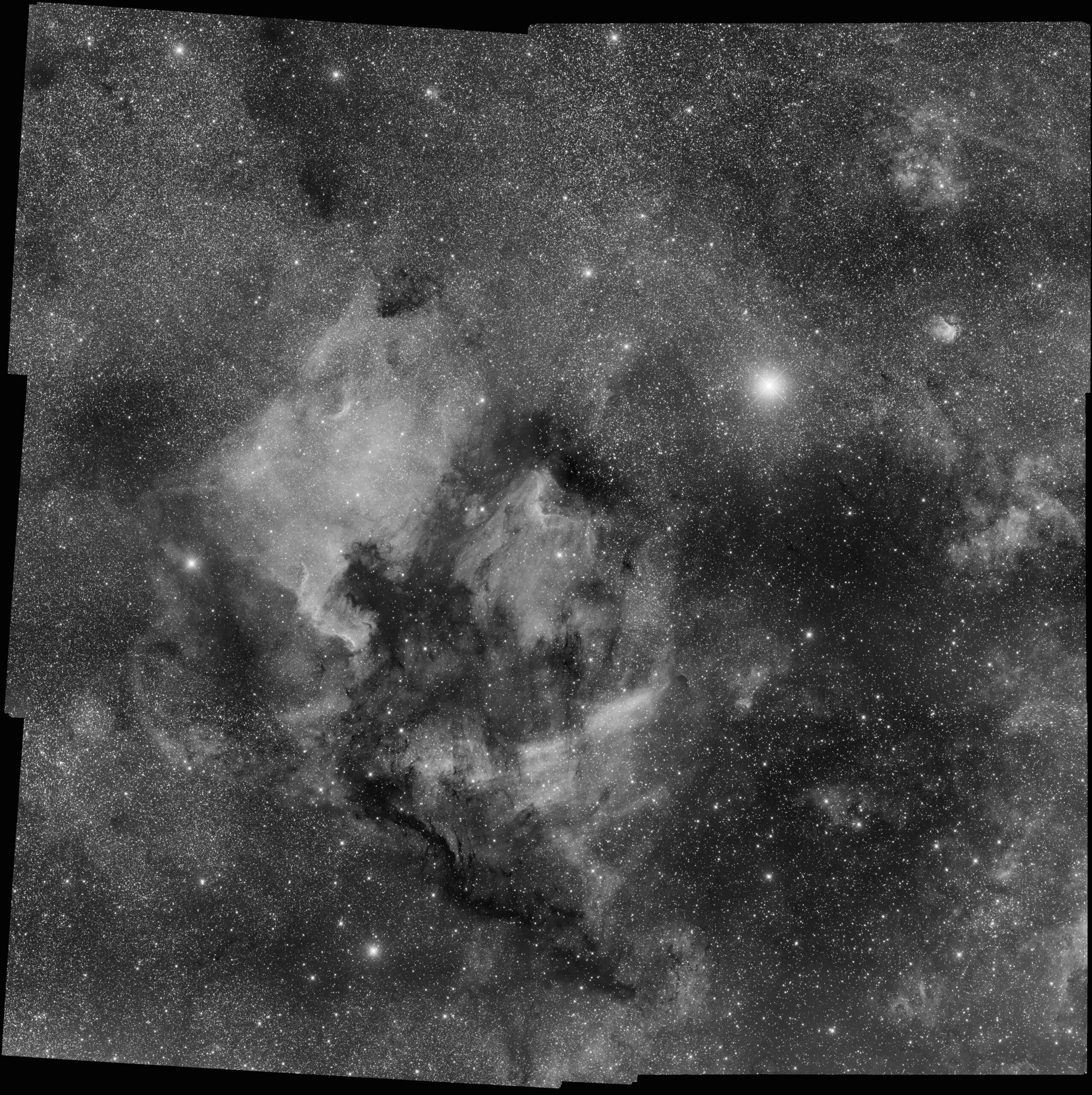
This is the result I got. Not perfect, but near perfect now. Only 1 registration flaw on the extreme right where the center-right and bottom-right panels overlap.
I’ll write down the exact stept for this workflow in the next couple of days ?
I have 2 arguments why this 6-panel is actually very hard to get perfect.
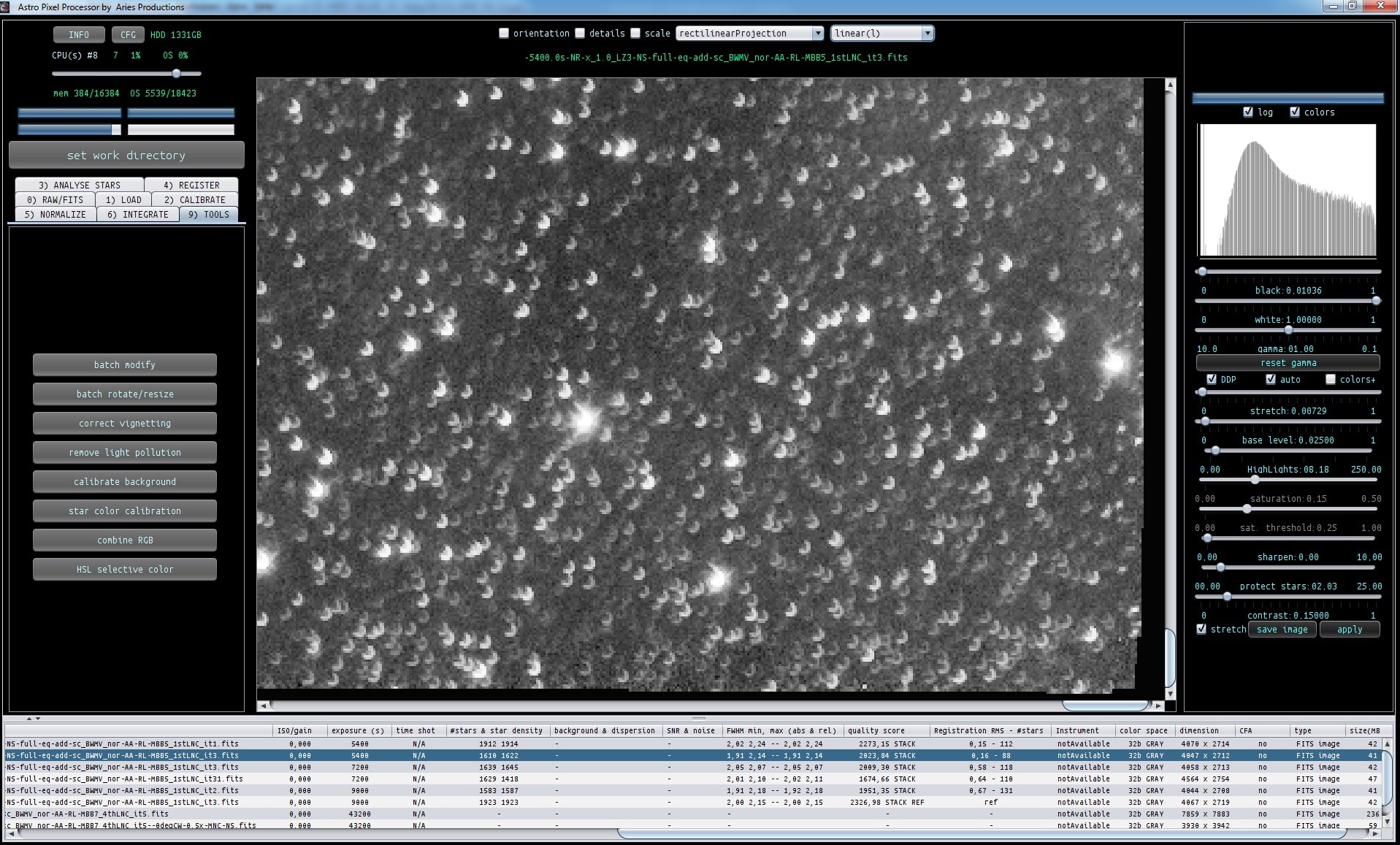
1) collimation problems, I noticed that the data was collected during several days. And collimation wasn’t constant over these days. Some panels have good stars in all 4 corners, but some have star shapes that are semi-circles instead of circles. This has a clear effect on the optical distortion pattern in your data, which isn’t constant, and also on the star lokation precision and the number of stars that are found in the corners particularly.
2) Rather small overlap between the frames. The overlap areas are less than 10% of the panels width/height. This is rather small. I suggest to have at least 10% and preferably 15% overlap. This will help a lot in gettting perfect distortion correction and thus perfect registration. More overlap between the panels will also make the success of the mosaic less dependant on not constant collimation over all imaging sessions.
To make APP more robust for mosaicing when the overlap is really small, I can improve more things in the registration engine. I’ll put these on the RFC ?
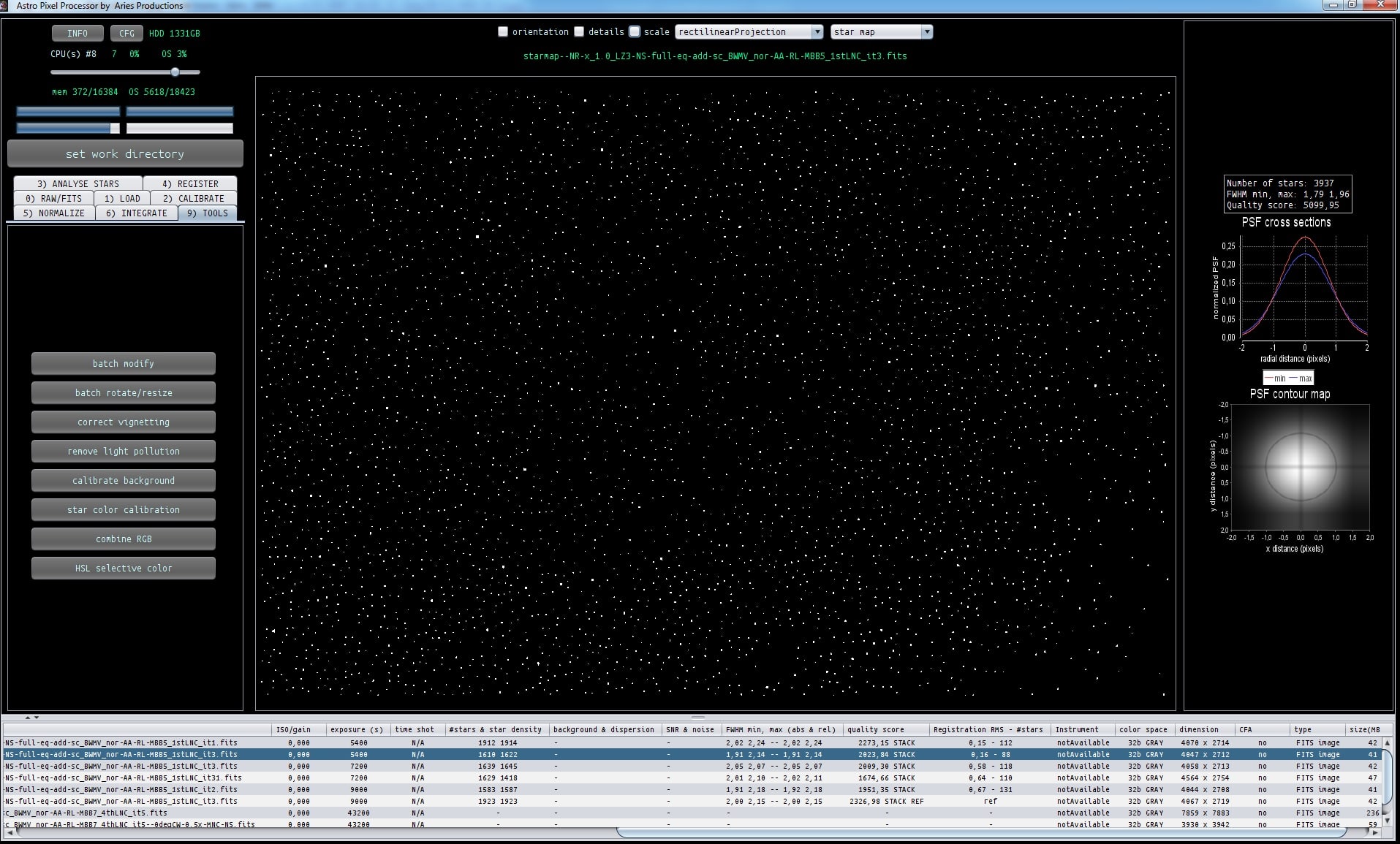
I have also included 2 screenshots, one of a panel with a corner that has bad collimation. And the starmap of the entire panel, which shows that the star detection is this corner is bad (lower-right), which has a clear effect on the registration precision.