

@bula
active 4 years, 11 months agoForum Replies Created
-
AuthorPosts
-
HaverkampParticipant
Thank you for sharing.
If you have xisf files, this means you have PI, and with PI you can convert them to FITS files easily. Even better, let PI save your files automatically in FITS. I consider this much more a PI issue, than an APP issue to be honest and the solution for a PI user is very easy as you all know.
So I would hardly consider this a priority from an “APP” perspective or a “problem”.
If someone can make the case that xisf is essential due to some special capability (which I haven’t found or seen sofar) or if someone knows that certain camera manufacturers are going to adopt xisf, or capture programs that will only use xisf, then it’s clear xisf should be implemented sooner rather than later off course. (For now, xisf only exists in the PI sphere and I honestly suspect it will stay there)
HaverkampParticipantHi @mth75,
Thank you for your request.
I will put this on the RFC list, but it will be completely at the bottom for now.
What would be the use case of supporting Xisf for you since you request this?
Maybe I am not up-to-date, but as long as no camera manufacturers or any capture application uses xisf I can’t see a real use-case for supporting xisf. If camera manufacturers start to use xisf, I’ll move this quickly to the top of the RFC list, since the use case becomes very clear then.
To my knowledge, xisf is created by PI and only used by PI. They have made FITS redundant, which is obviously very strange to state since the whole astronomical scientific community is working with FITS and not with xisf. But maybe I have missed something so please let me know if others are transitioning to xisf as well.
(FITS is perfectly able to store all kinds of data formats (unlike the statements made by the main PI developer) and so called problems with the FITS format are the result of bad API libraries or misunderstanding of the FITS conventions, at least that is my opinion.
Be aware that NASA actually still is putting money and effort in the further development of the FITS standard and APP is using their latest library.)
HaverkampParticipantHi @mauricetoet,
I have found the cause of this regression instability and I have fixed this for both settings (on/off) of “same camera and optics” while using “dynamic distortion correction”.
 HaverkampParticipant
Hi @mauricetoet,
The error is fixed, from all available frames left, APP will automatically choose a new reference frame using the frame quality estimate after star analysis.
I have also checked if all goes well if you were to start 5) Normalize after having removed the reference after 4) Register. This is working without problems as well.
For everyone else, this error was present in version 1.036.0, next versions shouldn’t contain this error.
Mabula
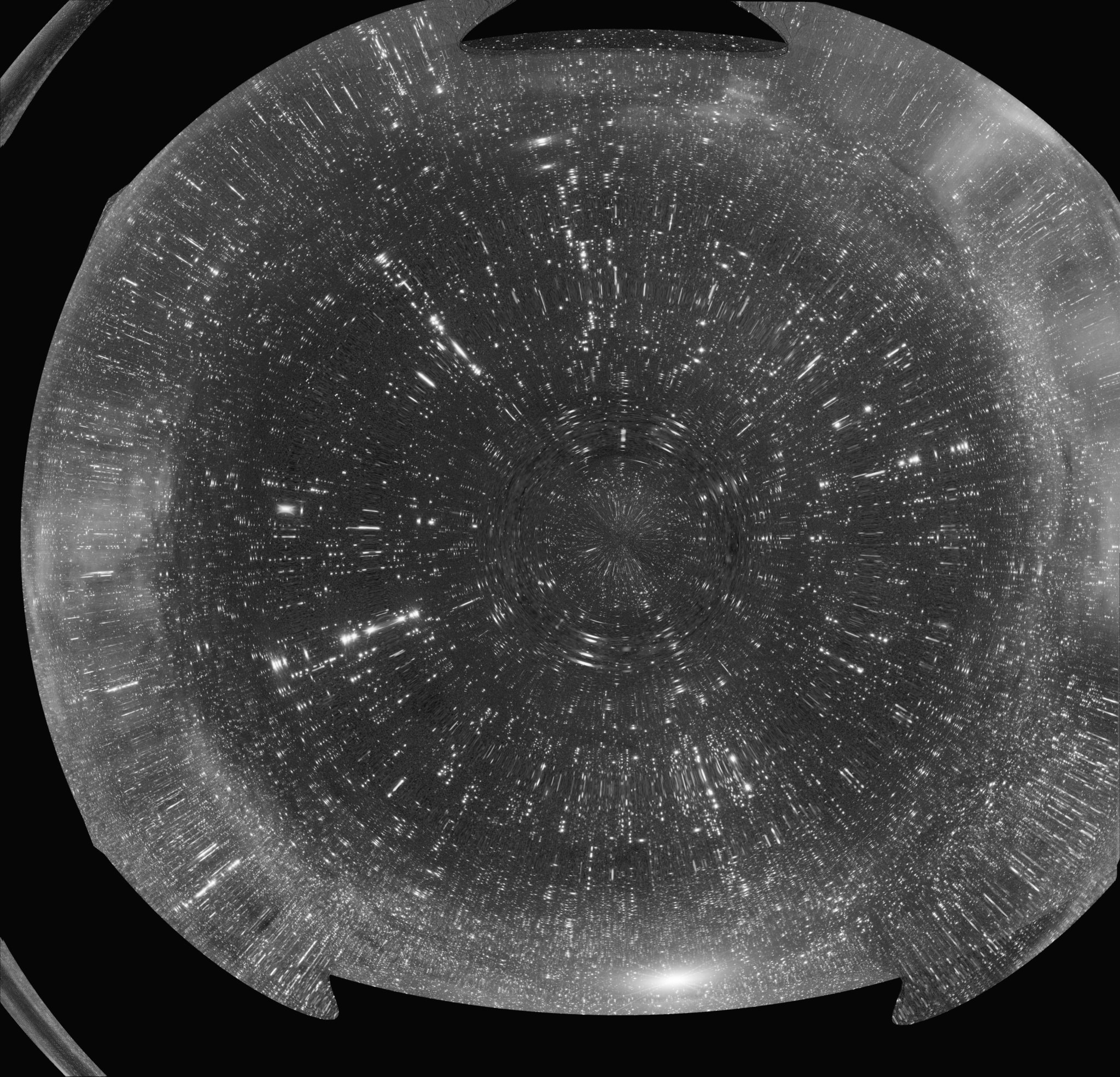
HaverkampParticipantI can replicate the sphere as well, it happens with the following registration settings:
– “same camera and optics” on and “dynamic distortion correction” on
If I turn “”same camera and optics” off, the result is even worse. (first image)
I’ll try to isolate the cause to fix this exception. This dataset clearly triggers instability in the dynamic ditortion correction algorithms which I need to catch ?
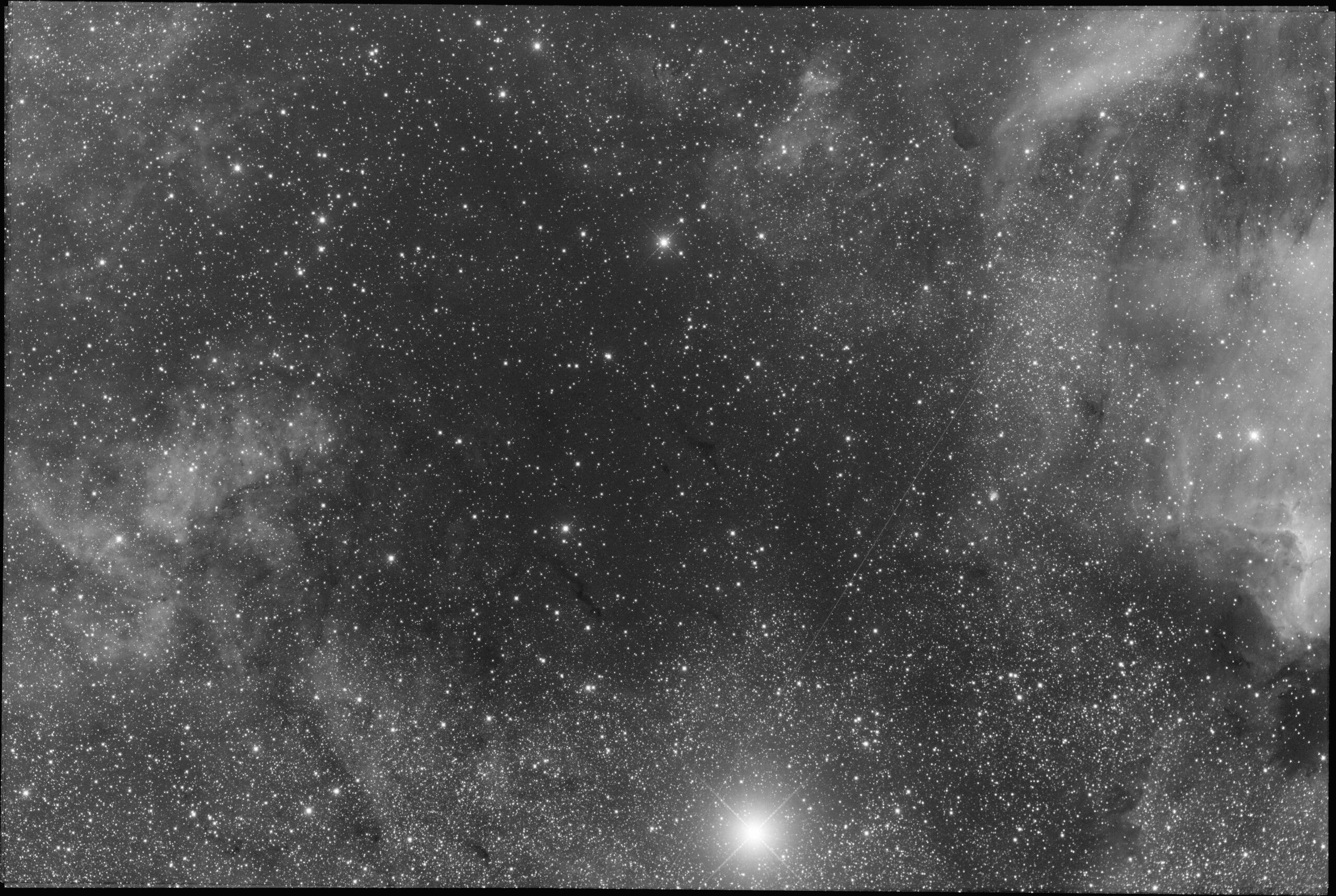
If I turn “dynamic distortion correction” off we clearly see that this dataset can be registered without distorton correction (image 2). The RMS registration values for all frames are in the range of 0,2-0,3 pixel.
 HaverkampParticipant
Hi @mauricetoet,
Indeed, I can confirm that the error is the deletion of the reference frame. I’ll fix this!
Mabula
HaverkampParticipantHoi Rob,
Check mijn presentatie in het engels, ik betwijfel of drizzling effect en nut heeft op jouw data gemaakt met de refractoren, maar kan het zeker niet uitsluiten.
Om drizzle effectief te kunnen en willen toepassen, moet je data aan een aantal voorwaarden voldoen:
1) de data moet goed gedithered zijn, dus je wilt dan elk frame ditheren zou ik adviseren.
2) de resolutie van het signaal moet beter zijn dan de resolutie van je sensor. Aangezien je signaal, bij lange belichtingen wordt gelimiteerd door de seeing, moet je voor Nederlandse begrippen goede seeing hebben. Als je dus fotografeert met een beeldschaal van 1 boog seconde, moet de seeing minder zijn dan 1 boogseconde (wat je in Nederland zeer zelden maar hebt). Als dat niet het geval is bereik je met drizzlen niet meer dan met upscalen middels Lanczos-3 data interpolatie, welke dan zelfst te preferen is, want
3) het gebruik en toepassen van drizzle is altijd een afweging tussen resolutie aan de ene kant en ruis aan de andere kant. Drizzle is een sterke ruis injector, dat is inherent aan de drizzle techniek. Ruis van de originele pixels wordt verspreid in de de doel pixels. Dus je zou ook kunnen stellen dat drizzle als voorwaarde heeft dat je veel data tot je beschikking moet hebben om de ruis te beperken terwijl je wat wint in resolutie.
Als je experimenteert met drizzlen, onthoud dat kleinere druppels (drops/droplets) je resolutie kunnen verhogen, met als prijs toenemende ruis in het resultaat.
Een normale drizzle setting om te beginnen in APP zou zijn, upscalen met een factor 2x en dan druppels kiezen van 0.75. (de eerste Hubble Space Telecoop foto’s met drizzle waren 2x upscalen en druppels van 0.6 uit mijn hoofd :-) ).
HaverkampParticipantIn APP zou je de LUM prima moeten kunnen combineren met de RGB kanalen middels een echte luminance functie in de RGB combine tool.
Ik zou het voor kunnen doen middels een nieuw draadje? Mogelijk ook een filmpje met engelse uitleg van mijn kant?
Mabula
May 2, 2017 at 14:32 in reply to: Calibration frames with different ISO settings, how to process? #14779HaverkampParticipantYou can either do: [light – n * dark] / [m * (flat – masterbias)] or [(light – masterbias) – n * (dark – masterbias)] / [m * (flat – masterbias)] where: n * dark = a masterdark with the bias offset n * (dark – masterbias) = a masterdark without the bias offset
Indeed, excellent @mauricetoet ;-)
May 2, 2017 at 14:29 in reply to: Calibration frames with different ISO settings, how to process? #14775HaverkampParticipantOr, if I’m right, you can use 150 darks with the bias in it which is what I do just to have a step less. But it takes a while to get those ofcourse.
For light frame calibration, yes, only use darks and flats then ?
But for the calibration of your flats, you’ll need to use either bias or darkflats/flatdarks (which is it?).
(Personally, I rarely use bias frames. Normally, I calibrate my light frames with darks and BPM and flats. And I calibrate my flat frames with flat darks and BPM.)
May 2, 2017 at 14:24 in reply to: Calibration frames with different ISO settings, how to process? #14773HaverkampParticipantAlmost perfect @musquetier, one final remark, at 4) create Bad Pixel Map. you don’t need to load the master bias. The master bias is not used in detection of bad pixels.
The bad pixel map can be created from master frames, like you are describing in this workflow. You can also create the bad pixel map from individual flat and dark frames as well ?
HaverkampParticipantLike I expected then, this sphere is then the result of very little or no movement between the light frames. For distortion correction to work you would need more dithering between the frames.
If the registration RMS is low (< than 0.3 pixel give or take) without using distortion correction then things are fine, otherwise I’ll need to have a closer look at your data ;-)
HaverkampParticipantOkay, the sphere most likely is the result of using distortion correction in a case where it’s actually not needed.
What registration settings did you use? Try registering without distortion correction and/or switching the “same camera and optics”select box.
Would love to test this myself @mauricetoet, so I can check in which algorithm this actually happens and prevent it from happening.
HaverkampParticipantHi @mauricetoet, I think you could be right that the removal of the reference is the problem. I’ll see if I can replicate and solve this. Thanks ?
APP would automatically need to select a reference for registration in this case, at the start of registration.
May 1, 2017 at 21:54 in reply to: Calibration frames with different ISO settings, how to process? #14743HaverkampParticipant1) great
2) no just the other way round actually ?
“So if I understand correctly I should load a Master BIAS when I create the Master DARK’s”
No, preferably not ? if you are going to use darks, it’s best to not use a master bias. So don’t load the master bias when you create the master dark. And don’t load the master bias when you calibrate the lights then.
And if you are going to make a master flat, always use a master bias or a master darkflat/flatdark ? to calibrate your flats.
-
AuthorPosts